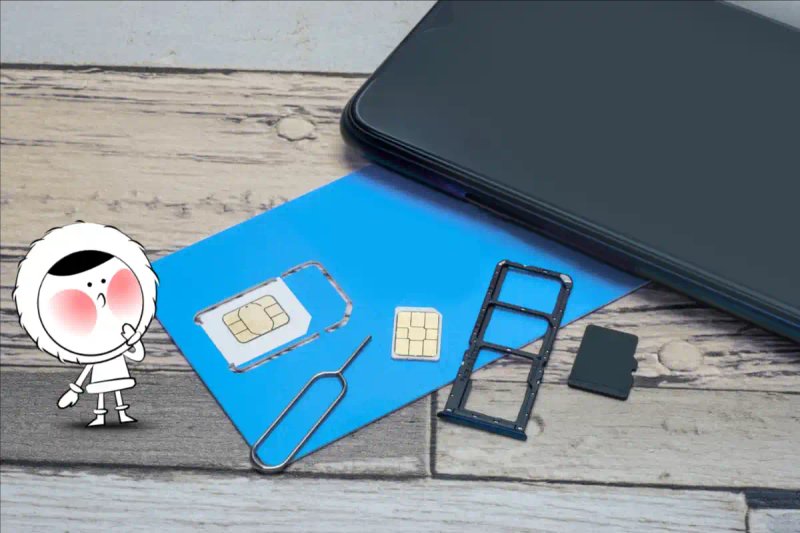
eUICC explained
eUICC (embedded Universal Integrated Circuit Card) is the technology that securely stores and manages mobile network profiles on a SIM. It enables remote SIM provisioning, so compatible devices can download or change eSIM profiles without swapping physical cards. eSIM describes the embedded SIM implementation, while eUICC describes its programmable functionality.
For travelers, this distinction matters because eUICC technology makes it possible to install mobile data plans digitally, manage multiple subscriptions, and prepare connectivity before arriving in another country.
Understanding the difference between eUICC and eSIM can also help you choose a compatible travel eSIM and avoid common setup problems.
What Is eUICC?
An eUICC is a secure, programmable SIM component that can store and manage multiple mobile network profiles. It supports remote SIM provisioning, allowing compatible devices to download, enable, disable, or delete profiles without replacing the SIM hardware.
The eUICC meaning comes from embedded Universal Integrated Circuit Card. Despite the word embedded, eUICC functionality is not limited to SIM components permanently built into a device. It can also exist in certain removable SIM products.
Traditional SIM cards generally come with a mobile operator’s subscription information already installed. An eUICC, by contrast, is designed to support the secure provisioning and management of operator profiles.
This technology makes it possible to:
- Store multiple profiles: Keep compatible mobile subscriptions from different providers on the same eUICC, subject to storage capacity.
- Install plans remotely: Download supported mobile subscriptions without visiting a physical store.
- Manage subscriptions: Enable, disable, or remove profiles using supported device settings or provisioning tools.
- Prepare for international travel: Install a travel eSIM before departure and activate it when needed, according to the provider’s instructions.
However, having an eUICC does not guarantee access to every mobile network.
Actual connectivity depends on the installed profile, provider agreements, device compatibility, carrier-lock status, and available network coverage.
How remote SIM provisioning works
Remote SIM provisioning is the process of securely delivering and managing mobile subscription profiles on an eUICC.
When you purchase a compatible eSIM plan, the provider typically supplies an installation method, such as a QR code, activation information, or an app-based setup process.
Your device then communicates with the relevant provisioning system to download the profile.
In consumer eSIM systems, a server called SM-DP+ helps prepare and securely deliver the profile to the device.
Once installed, the profile can be enabled according to the device’s settings and the provider’s activation rules.
Importantly, installing a profile does not necessarily mean that its data allowance or validity period starts immediately. Activation conditions vary by plan.
What Is eSIM?
An eSIM is commonly the embedded SIM capability built into a smartphone, tablet, smartwatch, or another connected device. It allows compatible devices to use mobile subscriptions without inserting a traditional plastic SIM card.
In everyday language, people also use eSIM to describe the digital mobile plan they purchase.
Technically, these are related but different concepts.
The embedded SIM hardware contains the secure component that supports eUICC functionality, while an eSIM profile contains the subscription information needed to connect to a mobile provider.
eUICC vs eSIM: Key differences
The main difference in eUICC vs eSIM is that eUICC refers to the programmable SIM functionality, while eSIM usually refers to the embedded SIM implementation or, informally, a downloadable mobile subscription.
| Term | What It Means | Why It Matters for Travelers |
| eUICC | A secure, programmable SIM component that manages mobile network profiles | Supports remote provisioning and management of compatible subscriptions |
| eSIM | An embedded SIM implementation, also commonly used to describe a digital mobile plan | Allows supported devices to use mobile services without changing a plastic SIM |
| eSIM profile | Downloaded subscription information associated with a mobile provider | Enables access to the networks permitted by that subscription |
| EID | A unique identifier associated with an eUICC | Can help with provisioning, compatibility checks, and technical support |
In simple terms, eUICC provides the profile-management capability, while an eSIM profile provides the mobile subscription.
A device needs compatible hardware, software, and provider support for the complete process to work.
[Image: eUICC chip, downloadable eSIM profiles, and mobile provider networks]
Alt text: eUICC vs eSIM diagram showing remote SIM provisioning and mobile network profiles.
Why eUICC Matters
eUICC technology gives travelers more flexibility when choosing and managing mobile subscriptions. Instead of relying entirely on physical SIM cards, compatible devices can install and manage digital profiles before or during a trip.
This can be especially useful for frequent travelers who visit several countries or want to keep their primary mobile number while using a separate travel data plan.
More flexibility when choosing providers
An eUICC can store compatible profiles from different mobile operators or travel eSIM providers.
This allows travelers to compare available plans and install a suitable subscription without physically replacing the SIM.
However, the ability to install several profiles does not mean every profile can connect to every local network.
Network access depends on the provider’s commercial agreements, the destination, and the specific plan.
Remote installation and management
Compatible eSIM plans can often be installed through a QR code, device settings, or a provider’s app.
This makes it possible to prepare a travel data connection before leaving home.
Some providers also support digital top-ups or additional plan purchases, although these features depend on the service.
Less reliance on physical SIM cards
Travelers using an embedded eSIM do not need to carry a separate plastic SIM for every destination.
This reduces the need to remove a primary SIM card and lowers the risk of misplacing it during a trip.
You should still confirm that your device supports eSIM and is not restricted to another provider.
Potential savings on international data
Travel eSIM plans can offer an alternative to using your home carrier’s international roaming service.
The actual savings depend on the destination, plan price, data allowance, and your existing roaming benefits.
Compare the total cost and coverage rather than assuming a travel eSIM will always be cheaper.
eSIM Terms You Need to Know
Understanding common eSIM terminology makes it easier to compare providers, check compatibility, and troubleshoot installation problems. The following terms describe different parts of the mobile connectivity system.
eUICC
An eUICC is the secure, programmable SIM component that supports storing and managing compatible operator profiles.
It enables remote provisioning but does not independently determine which mobile networks a subscription can access.
MNO
A Mobile Network Operator (MNO) is a telecommunications company that operates a mobile network.
MNOs typically own or control network infrastructure and provide mobile connectivity to customers directly or through commercial partners.
MVNO
A Mobile Virtual Network Operator (MVNO) provides mobile services using network access obtained from one or more underlying operators.
An MVNO does not generally operate a complete radio access network of its own.
Some MVNOs sell services under their own brands, while others serve businesses or specialized customer groups.
eSIM
An eSIM generally refers to an embedded SIM implementation that supports digital mobile subscriptions.
In consumer discussions, the word is also used for a downloadable mobile plan, even though the hardware and subscription profile are technically different.
eSIM profile
An eSIM profile contains the subscription information required for a device to authenticate with a mobile provider.
A compatible eUICC may store multiple profiles, but the number depends on available storage and device support.
Not all stored profiles can necessarily be active simultaneously.
EID
An EID, or eUICC Identifier, is a unique identifier associated with the eUICC.
Providers may use it during provisioning, device checks, or technical support.
You can learn more in Eskimo’s guide to finding your EID.
SM-DP+
SM-DP+ stands for Subscription Manager Data Preparation Plus.
In consumer eSIM provisioning, it is a server-side function responsible for preparing and securely delivering subscription profiles to compatible devices.
Most travelers do not need to interact with SM-DP+ directly.
Dual-SIM
Dual-SIM means a device can support two mobile subscriptions.
Depending on the model, this might involve two physical SIM cards, one physical SIM and one eSIM, or two active eSIM subscriptions.
The number of profiles a phone can store and the number it can use simultaneously are separate device capabilities.
Do not assume every eSIM-compatible phone can store eight profiles or operate two eSIMs at once.
Mobile plan
A mobile plan defines the services available through a subscription.
Depending on the provider, it may include mobile data, calls, SMS, roaming access, or a combination of these features.
Some travel eSIM plans provide data only, so check whether traditional voice calls and SMS are included before purchasing.
Get Eskimo eSIM to stay connected globally
Need internet while travelling? Here's what we recommend:

Fixed data plans
- No speed reduction
- No expiry, keep your data forever
- Transfer data to anyone
- Personal hotspot


Can All eSIMs Use Multiple Providers?
An eUICC can support profiles from multiple providers, but not every eSIM-compatible device can use every provider. Compatibility depends on device capabilities, carrier restrictions, provisioning support, and the selected plan.
Many modern eSIM-compatible smartphones can store several subscriptions and let users select which one to use.
However, the exact number of stored profiles and active subscriptions varies by model.
Carrier locks can restrict eSIM installation
A network-locked phone may be restricted to subscriptions from a particular carrier.
Even when the phone has eSIM hardware, the lock can prevent a travel eSIM from another provider from working.
Before purchasing an eSIM, check whether your device is unlocked.
For instructions, follow Eskimo’s network-locked phone unlocking guide.
Network availability depends on the plan
Installing an eSIM profile does not provide unrestricted access to all networks in a country.
The profile connects through networks supported by the provider’s arrangements.
Coverage, supported network technologies, and local conditions can affect the experience.
For international travel, review the destination coverage information for the specific eSIM plan you intend to use.
How the Industry Uses eUICC and eSIM Technology
eUICC technology is used in smartphones, wearables, connected devices, and some removable SIM products. The underlying goal is to support secure subscription provisioning without requiring a newly issued physical SIM for every profile change.
Most travelers encounter eUICC through the built-in eSIM functionality of a compatible phone.
However, embedded hardware is not the only possible implementation.
Removable eUICC adapters
Some third-party companies offer removable SIM cards with eUICC functionality.
These products are designed to fit into a physical SIM slot and may support downloading and managing compatible eSIM profiles through additional software.
They can be useful in certain devices that do not have native eSIM functionality.
However, compatibility is not universal.
Before considering a removable eUICC product, check:
- Whether your phone model and operating system are supported.
- Whether the product can install and manage the eSIM profiles you intend to use.
- Whether a companion app or another compatible device is required.
- Whether the provider permits its profiles to be installed on that product.
- Whether your phone is network-unlocked.
A removable eUICC product should not be treated as a guaranteed replacement for native eSIM support.
Are removable eUICC cards the same as built-in eSIMs?
Removable eUICC products and built-in eSIMs can support similar subscription-management functions, but their compatibility and user experience may differ.
Both approaches can potentially store supported mobile profiles.
However, their installation methods, device integration, software requirements, and provider compatibility are not necessarily identical.
There are several practical differences to consider.
Device compatibility: A removable product may work in some phones without native eSIM functionality, but support depends on the product and device.
Setup requirements: Some removable solutions require a dedicated app or another supported device to download profiles.
Physical handling: A removable card can be transferred between compatible devices, but moving the card does not guarantee that every installed subscription will continue working.
Provider restrictions: Certain eSIM profiles may be limited to specific devices or provisioning methods.
Performance: Mobile connectivity depends on the device’s radio hardware, supported bands, network conditions, and provider configuration. Similar SIM functionality does not guarantee identical performance.
For most travelers with a modern eSIM-compatible phone, native eSIM support is generally the simpler option.
Transferring and reinstalling eSIM profiles
Transferring an eSIM profile between devices depends on the phone, operating system, mobile provider, and subscription rules.
Some providers support supported-device transfers through built-in operating system features.
Others require a new activation code, a replacement profile, or assistance from customer support.
Deleting an eSIM profile does not automatically guarantee that the same QR code can be used again.
Before changing phones or removing a travel eSIM, check the provider’s current transfer and reinstallation policy.
This is especially important if you still have unused data.
How Eskimo eSIM Uses eUICC Technology
Eskimo uses eSIM technology to provide travelers with digital mobile data plans that can be installed on compatible devices. This allows eligible travelers to prepare connectivity without purchasing a physical SIM card at their destination.
Eskimo’s wider network footprint spans 175 countries and regions, although the destinations available through an individual plan may be fewer.
Coverage should always be checked at the plan level.
Eskimo also offers eligible fixed-data plans with no-expiry data, subject to the applicable plan terms.
This can provide additional flexibility for travelers who prefer to use their data over time rather than within a short, fixed validity window.
However, plan benefits, supported destinations, and activation conditions can vary.
Before purchasing, check the current coverage, data allowance, and product conditions for your destination.
Using an Eskimo eSIM when traveling
If your phone supports eSIM and is network-unlocked, you can prepare a compatible Eskimo travel data plan before departure.
A typical setup involves:
- Checking that your device supports eSIM and is network-unlocked.
- Selecting a plan that covers your destination.
- Following the provided eSIM installation instructions.
- Confirming which mobile data line to use during your trip.
- Enabling any required data-roaming setting for the travel eSIM, according to the provider’s instructions.
Keep your primary SIM settings in mind if you want to avoid unexpected roaming charges from your home carrier.
An eSIM can provide mobile data while traveling, but it does not automatically disable charges associated with another active subscription.
Frequently Asked Questions
Is eUICC the same as eSIM?
No. eUICC refers to the secure, programmable SIM functionality that manages mobile network profiles.
eSIM usually refers to the embedded SIM implementation or, in everyday usage, a downloadable mobile subscription.
The technologies are closely related, but the terms are not interchangeable in every technical context.
Can one eUICC hold multiple eSIM profiles?
Yes. An eUICC can support multiple compatible operator profiles.
The number that can be stored depends on the component’s capacity and the device’s implementation.
The number of profiles that can be active at the same time depends on the device.
Can eUICC bypass a carrier lock?
No. eUICC functionality does not automatically bypass network restrictions imposed by a carrier.
A network-locked phone may still reject profiles from other providers.
Check the phone’s unlock status before purchasing a travel eSIM.
What is an EID on a phone?
An EID is a unique identifier associated with the device’s eUICC.
It can be used for provisioning, compatibility checks, or troubleshooting.
An EID is not the same as your phone number or the mobile plan’s data allowance.
Can a phone without built-in eSIM support use eSIM profiles?
Some phones may support certain removable eUICC products through their physical SIM slots.
However, this depends on the device, operating system, removable product, and eSIM provider.
A removable eUICC card does not guarantee compatibility with every eSIM plan.
Does installing an eSIM automatically activate the data plan?
Not always. Some plans begin their validity period when installed, while others begin when the device first connects to a supported network or when another activation condition is met.
Check the specific plan’s activation rules before installation.
Check Your eSIM Compatibility Before Traveling
Before buying a travel eSIM, confirm that your phone supports eSIM, is network-unlocked, and is compatible with the plan you want to use. These checks can prevent installation problems and help you prepare mobile connectivity before departure.
Understanding eUICC, eSIM profiles, and remote SIM provisioning also makes it easier to manage your subscriptions and recognize which features depend on your device or provider.
If you’re preparing for an international trip, review Eskimo’s available destination coverage and select a plan that matches your travel needs.
New users can also claim a free 500MB Global eSIM.