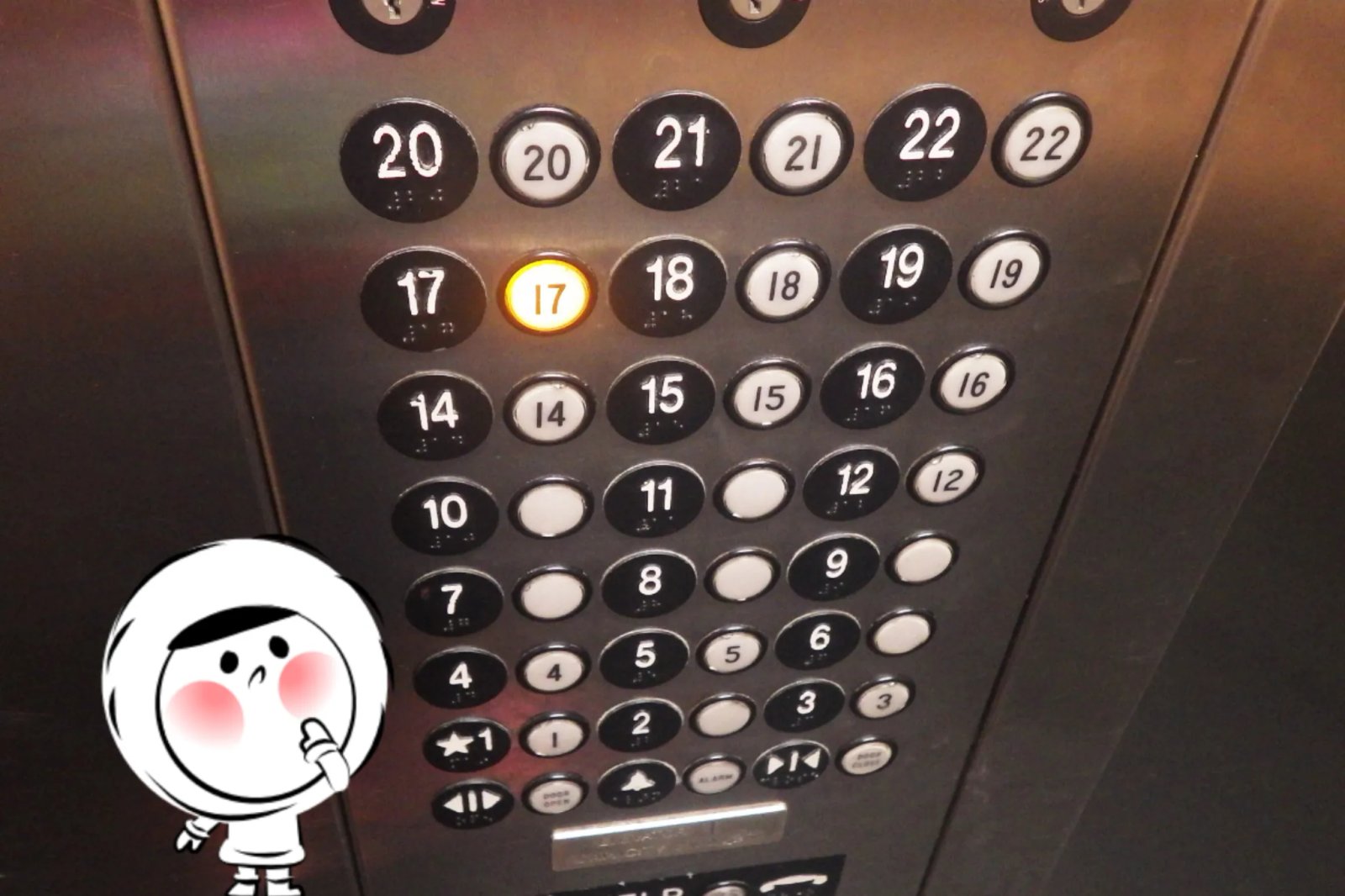
Walk into an elevator in many Western hotels, and you might notice something strange. 11… 12… 14. Where did 13 go? In many countries, hotels skip the 13th floor because of a long-standing cultural belief that 13 is an unlucky number. The floor physically exists, but the number is removed to avoid discomfort among guests. It’s not a construction issue. It’s psychology.
The 13th Floor Mystery
If you’ve ever wondered why there’s no button for 13 in some elevators, the answer is simple:
It’s skipped due to superstition.
The belief is especially common in the United States, Canada, the UK, and parts of Europe. In these regions, developers often avoid labeling any level as “13” to prevent hesitation from guests who associate the number with bad luck.
This practice is not required by law. It’s driven by perception. Hotels prioritize guest comfort. Even a small psychological trigger can influence booking decisions.
Why Is Number 13 Considered Unlucky?
The idea that 13 is an unlucky number has deep historical roots.
It is linked to:
- Triskaidekaphobia, the fear of the number 13
- Friday the 13th history, which strengthened the superstition
- Biblical references, such as the Last Supper, where Judas was the 13th guest
- Norse mythology, where Loki appeared as the 13th visitor at a banquet
The term triskaidekaphobia literally refers to fear of the number 13. While not everyone believes in it, the concept has influenced architecture, aviation seating plans, and hotel layouts. Superstition does not need logic to survive. It only needs tradition.
Which Countries Commonly Skip Floor 13?
You’ll most often see hotels skipping the 13th floor in:
- United States
- Canada
- United Kingdom
- Parts of Europe
This is not a regulation. It is marketing psychology. Developers understand that if even a small percentage of guests feel uneasy about a room labeled 13, it’s easier to rename the floor. Interestingly, the practice appears less frequently in countries where the number 13 carries no negative symbolism.
For travelers moving between regions, cultural details like this appear in subtle ways. From hotel floor numbers to payment customs, small differences reflect deeper traditions. Staying connected with Eskimo eSIM while abroad helps you quickly check local norms, especially in unfamiliar destinations.
Get Eskimo eSIM to stay connected globally
Need internet while travelling? Here's what we recommend:

Fixed data plans
- No speed reduction
- No expiry, keep your data forever
- Transfer data to anyone
- Personal hotspot


It’s Not Just 13: Unlucky Numbers Around the World
The fear of 13 is mostly Western. Other countries have their own number superstitions.
For example:
- China: The number 4 is avoided because it sounds similar to the word for death. Many buildings skip the 4th floor entirely.
- Japan: Both 4 and 9 can carry negative associations.
- South Korea: Elevators sometimes replace 4 with “F.”
- Italy: The number 17 is considered unlucky in certain contexts.
This broader context strengthens the idea that superstitions are cultural, not universal. If someone searches for “unlucky numbers in Asia” or “unlucky number in China hotel,” they’ll find that number 13 is not the primary concern there. Travel exposes these fascinating contrasts. A skipped floor in New York might feel mysterious, while a missing 4th floor in Shanghai feels completely normal.
Does Skipping Floor 13 Actually Change Anything?
From a structural perspective, nothing changes. The floor physically exists. Internally, engineers and emergency services still label levels sequentially. The number 13 may appear in architectural plans and safety documentation.
Only the public-facing number is altered. Guests might step out onto “14,” but in terms of elevation, they are standing exactly where the 13th floor would be. It’s a renaming decision, not an architectural omission.
Are New Hotels Still Skipping It?
This is where trends shift slightly. Some modern luxury and boutique hotels now include a labeled 13th floor without hesitation. Younger travelers tend to care less about numerical superstition. However, many large hotel chains still skip it, especially in North America. Developers balance tradition with brand positioning. Removing the number avoids potential discomfort. Keeping it can signal modern confidence. Both approaches exist today.
Does It Affect Room Prices or Safety?
No. Skipping floor 13 does not impact safety, pricing, or structural integrity.
Room rates are determined by demand, location, and category, not by numerical labeling. The difference is purely psychological. If a hotel includes a 13th floor, it does not increase risk. If it skips it, the building is not missing a structural level. It is a cultural design choice.
FAQs
Why don’t hotels have a 13th floor?
Because of the belief that 13 is an unlucky number, especially in Western cultures influenced by triskaidekaphobia and Friday the 13th.
What does triskaidekaphobia mean?
It refers to the fear of the number 13. The word comes from Greek roots meaning thirteen and fear.
Is 13 an unlucky number everywhere?
No. The superstition is strongest in Western countries. In parts of Asia, numbers like 4 are considered more unlucky.
Why is Friday the 13th considered unlucky?
The belief combines religious symbolism, medieval folklore, and later pop culture influence.
Do all hotels skip the 13th floor?
No. Some modern hotels include it. Others still avoid it depending on location and brand positioning.